
Location: The Broadcast Engineering Museum, Lincolnshire
Date: 4th October 2026
Time: 11:00 – 16:00
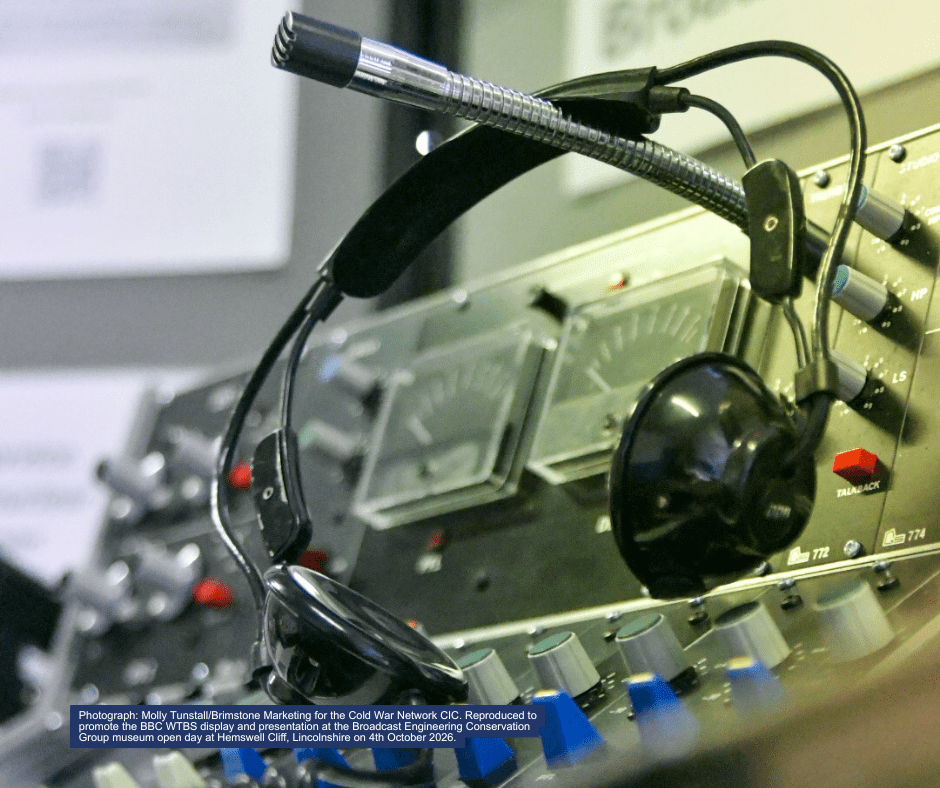
From the 1950s to the 1990s, if the Cold War had turned hot, the Government had plans for what to do in the event of a nuclear strike on Britain. Part of those plans was the implementation of the Wartime Broadcasting Service (WTBS) – a single national radio station that would have replaced radio and television services in the UK. @followers
This autumn, Iain Betson will be staging a display and presentation of a little-known piece of Cold War and UK broadcasting history. With presentations on aspects of the WTBS throughout the day, he’ll also be manning a display of documents, images, and typical broadcast equipment the service would have used.
For further information/directions, see:
https://becg.org.uk/2026/05/20/the-last-voice-you-would-have-heard-4th-october-2026/